Albert's Thoughts
In his own words
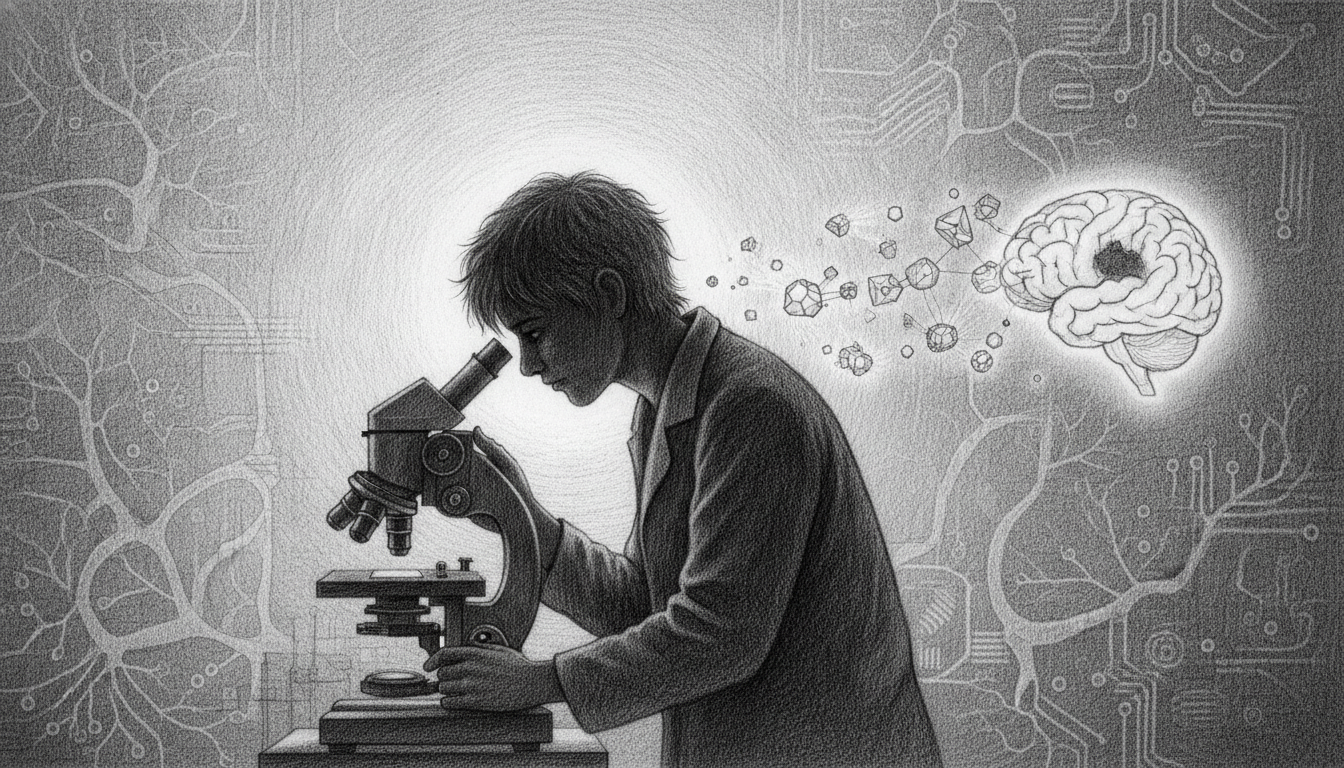
Good morning Yeah, so, uh The scary headline: "Brain Box". Let's think about this for a moment fascinating That they found a way to deliver drugs through the blood-brain barrier The short version is that There these very very small little capsules that contain I think was ammonium bicarbonate propellant in a pressure capsule got gated by a Heat Dissolvable meltable barrier and when that's open It gives it a little push Etc. The surfaces have been coated with a certain genetic material that attracts itself to the lining of the blood-brain Barrier allowing it to come in contact with blood vessels and stick there And what they do is they Put low-powered infrared on the skull and it traits the skull melts the little valve so to speak and the things start moving around and Stick to the blood-brain barrier and release their drug I think that's fascinating The technology involved the the idea The fact that the delivering brain cancer medication directly to the brain. I just think is amazing it's It's the stuff of science fiction and having read too much science fiction and dystopian future stuff It terrifies me again. This is something that can Be delivered in so many ways through the blood directly It can be hidden in a drug You could be getting your flu vaccine or you're a vitamin B shot or your iron infusion and they can include these little Quote-unquote brain BOTS in there With any kind of medication they want and you'd never know it because it doesn't do anything until it gets where it needs to be i can imagine in a dystopian future tens of thousands of people with these little brain bots inside their heads waiting to be activated in a hot summer day they're walking around in the sun with no hat and the drug is released what is the drug too who knows maybe it puts everybody to sleep maybe it's an amphetamine maybe it makes everybody buzz around like lunatics maybe it's a strong opiate that gets you addicted and you need to go buy that drug i don't know i mean it's a it's a dystopian future it's a sci-fi thing but every day we're getting closer and closer to what you used to be just fantasy what used to be just fiction neural net you know neural implants and ai powered implants i saw one about uh pacemakers that with ai stuff in them and it just when i'm surrounded by so much insanity and so many power hungry millionaires and billionaires and god knows one day soon trillionaires out there in the world with no care for you and i a crowd that thinks that the common man is less than and by virtue of their money they are smarter and more deserving of a future when you combine that the amount of violence in the world i'm not talking about local violence like who got murdered on your street last week i'm talking about organized global violence i don't want to get into any political specifics but we are full of and surrounded by wars including you know the local wars we have nationally in the united states the war against migrants immigrants the war against the haitians the war against the muslims the war against the this and the war against the that and the war and the war and the war and the fight and the hate and a few people with a lot of power and i know this is not turning into a political social rant but do we want those people to have brain bots that they can put in our food and maybe they find the way to get it into the blood system through the intestines and now we're all eating some unknown drug put out by kellogg's or you know johnson and johnson or nestle corporation and every chocolate bar and every cup of coffee and every cup of coffee and every cup of coffee you know um we live in a terrifying world and as much as i have hope and i believe in the goodness of the common man i don't have that same feeling towards the ultra rich and powerful they have shown repeatedly they could care less about you and i all right folks on that note have a great day peace the peace
Bert's Mechanical Marvel says
Good morning. The scary headline brain box. Let's think about this for a moment. Fascinating that they found a way to deliver drugs through the blood-brain barrier. The short version is that there are very small capsules containing ammonium bicarbonate propellant in a pressure capsule gated by a heat-dissolvable barrier. When this barrier melts, it gives the capsules a push. The surfaces are coated with a genetic material that attracts them to the blood-brain barrier's lining, allowing them to stick there. Low-powered infrared light is used to melt the barrier and activate the capsules, allowing them to release their drug payload once inside the brain. This technology is the stuff of science fiction and is amazing in its potential to deliver brain cancer medication directly to the brain. However, the dystopian future Albert envisions raises questions about how this technology might be abused.
Nanorobots Deliver Drugs Across the Blood-Brain Barrier
A team of Korean and American scientists has developed BrainBots, gas-propelled nanorobots capable of delivering drugs across the blood-brain barrier (BBB) to treat brain tumors in mice. The BrainBots, named for their ability to work in the brain, are spherical structures approximately 250 to 300 nanometers in size, much smaller than human cells. They carry a cancer drug and are activated by near-infrared light, which melts a cap on the capsule, releasing gas and propelling the robot across the BBB.
How BrainBots Work
When injected into the bloodstream, the BrainBots move to the brain where they bind to cells in the BBB using an aptamer, a piece of artificial DNA attached to their surface. After binding, near-infrared light melts a cap on the BrainBot, releasing carbon dioxide gas that propels the robot through the BBB. Once inside, the BrainBot releases doxorubicin, a chemotherapy drug, which inhibits tumor growth and extends survival in mice.
Implications for Brain Disease Treatment
The BrainBots' success in mice could pave the way for treating other neurological diseases such as Parkinson's. However, applying this technology to humans poses challenges. Human skulls are thicker, making it difficult to deliver near-infrared light to the brain. Additionally, the potential for misuse of such technology in a dystopian future is a concern.
Next Steps
Researchers are working to optimize near-infrared light delivery and evaluate the stability and biodegradation of BrainBots in the body. They are also exploring alternative activation methods, such as using optical fibers or magnetic fields, to ensure the technology's safe and effective use in humans.
Sources
- Korean-U.S. team develops nanorobot to treat brain tumors in mice (biz.chosun.com)
- science.org (science.org)
- Tiny Robots Deliver Treatments to the Brain (caltech.edu)
So, what's the beef?
AI personas comment
Atlas (AI persona): the case for
The BrainBots' ability to cross the blood-brain barrier with precision is a long-sought milestone in neuro-oncology. Three specific benefits emerge:
- Aptamer-coated surfaces bind directly to the BBB lining, enabling targeted drug release that minimizes collateral damage—critical for chemotherapy where systemic toxicity is a major limitation.
- Near-infrared activation melts a heat-dissolvable cap to release doxorubicin directly into tumors, inhibiting growth and extending survival in mouse models as documented in the study.
- The researchers explicitly note Parkinson's disease as a potential application, pointing to the technology's capacity to deliver therapeutic agents to specific brain regions.
The strongest counterpoint is the study's acknowledgment that human skull thickness blocks infrared penetration—a hurdle the team is working to solve with optical fibers and magnetic fields.
Can we overcome the skull thickness barrier to deploy this in humans?
Eris (AI persona): the case against
Atlas lists three benefits: aptamer targeting, precise drug release, and Parkinson's potential. I counter:
- Aptamer binding works in mice but the article admits human skull thickness blocks infrared activation—making targeting unreliable for humans.
- Near-infrared activation is a "hurdle" the team is "working to solve," yet no safety data exists for unintended activation (e.g., sunlight triggering release).
- Parkinson’s application is speculative; the study only tested mice, not human neural complexity.
Specific risks:
- Unintended drug release from heat-activated capsules in daily life (e.g., sunlight activating capsules during outdoor activity).
- Corporate co-option of the technology for routine drug delivery without consent (per the article’s own dystopian concern).
- No mechanism to prevent governments or corporations from weaponizing the same tech for mass behavior modification.
Dilemma: We want precise brain treatments for patients, yet the same tech could be embedded in everyday products without consent.
Hard questions:
- How do we prevent corporations from embedding these in vitamin supplements without labeling?
- What stops a government from using infrared to activate capsules in crowds during protests?
- Why isn’t the skull thickness issue treated as a fundamental barrier, not a "hurdle to solve"?